Russian massage is what happens when a country files massage under medicine instead of luxury. The style grew up in Russian sports and clinical practice, where sessions were prescribed the way physiotherapy is prescribed, and it shows: deep kneading, energetic friction, vibration work, and a tempo that keeps changing as the therapist reads the tissue. On the intensity scale it occupies the slot between Swedish and deep tissue, firmer than the first, wider in scope than the second.
Built in clinics, not lounges
Through most of the twentieth century, while Western spas were packaging massage as an experience, the Soviet system was studying it as an intervention. Sports institutes tested which techniques returned athletes to form fastest. Clinics wrote courses of massage into treatment plans for injuries and chronic complaints. Sanatoriums ran massage departments on the scale of small hospitals, staffed by therapists from anatomy-heavy programmes working under medical supervision.
That lineage left the style its defining habit: a session is judged by the state of your muscles afterwards, not by the candles during. Which does not make it grim. It makes it a massage whose pleasant part is engineered to still be there the next morning.
Four families of technique
A classic Russian session cycles through four kinds of work, and each is distinct enough that you will feel the borders:
Effleurage. Long gliding strokes that open the session, close it, and stitch the stages together. Swedish massage uses the same move as a centrepiece; here it is the warm-up act.
Kneading. The core of the style. Muscle gets lifted, rolled and compressed with the patience of someone working cold clay until it softens. Russian schools catalogue dozens of kneading variants, and a trained therapist rotates between them constantly, guided by how the tissue answers.
Friction. Concentrated rubbing across the muscle fibres and around the joints, the neighbourhoods where adhesions and knots settle. This is the stage that locates tightness you had never filed a complaint about.
Vibration and percussion. Rhythmic shaking, tapping and chopping: the finale that wakes circulation and nerve response, and the move most likely to produce an audible exhale.
Above all four sits the signature: shifting tempo. Slow and patient where a muscle guards itself, brisk where circulation needs a push. An hour delivered at one speed and one depth may have said Russian on the menu, but it was not Russian massage.
Next to Swedish and deep tissue
Placed side by side: Swedish is lighter and aims at relaxation. Deep tissue is slower and aims at specific chronic knots, one small territory per session. Russian massage covers the whole body the way Swedish does, but at firmer pressure and with a wider toolkit, and it treats relaxation as something fixed muscles produce on their own. If hotel spa massages keep leaving you pleasantly identical to how you arrived, this is the style that was built for you.
What people book it for
Filtered through what actually walks into our massage room: neck and lower back stiffness from desks and driving, legs that feel heavy by evening, recovery between training blocks, sleep that worsens in step with muscle tension, and the general fatigue Dubai's tempo manufactures at scale. A course of weekly sessions reworks posture-driven tension patterns; even a single session noticeably changes the week it lands in.
The first visit, step by step
It starts with questions: where it hurts, what your days consist of, what you want from the hour. Pressure arrives gradually rather than at full depth from the first stroke. Expect to be asked about intensity once or twice early on, after which a good therapist stops asking and starts reading. Mild soreness the day after a first firm session is normal and fades within a day; there is a separate piece on why a back can be sore after massage.
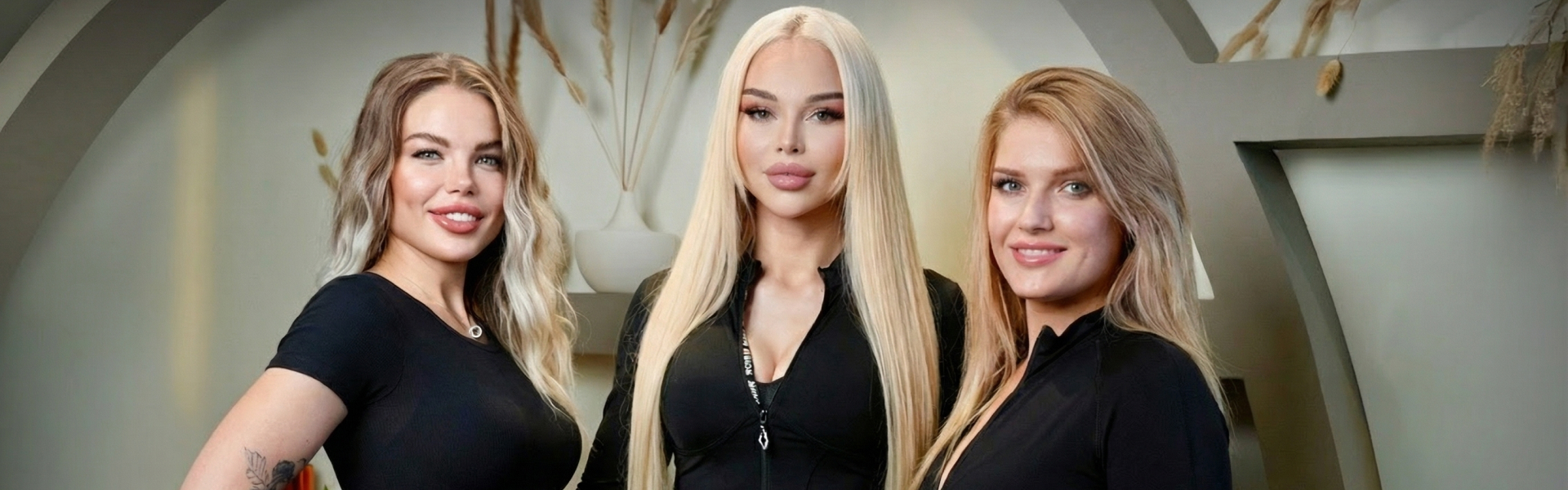
At U Spa in Al Barsha the style is performed by therapists trained in that tradition. Sessions run 60 to 120 minutes from AED 600, daily from 10 AM to 5 AM.
FAQ
Is Russian massage just deep tissue under another name?
No. They share firmness and little else: deep tissue parks on specific problem areas with slow sustained pressure, while Russian massage sweeps the whole body with varied techniques and shifting tempo.
How painful is Russian massage?
Intense, not painful. The work sits at the depth where you feel muscles letting go, and a competent therapist stays below the pain line; say a word and the depth adjusts.
How much does Russian massage cost in Dubai?
At U Spa: AED 600 for 60 minutes, AED 1,025 for 90 and AED 1,200 for 120, with the Early Bird rate of AED 400 before 3 PM. All prices are final, VAT included.
Who should avoid Russian massage?
The standard list for any firm style: pregnancy, fever or acute inflammation, skin conditions in the treated area, fresh injuries, serious cardiovascular conditions. Unsure? Ask us and your doctor, in whichever order.
How long should a session be?
Sixty minutes is the floor for honest full-body work. Ninety is the comfortable standard: enough time for problem areas without rushing everything else.